
Can You Use Home Equity to Lower the Rate on Your Next Mortgage?
If you sell a home with equity, you may be able to use part of the sale proceeds to pay discount points on your next mortgage. Discount points are fees paid at closing in exchange for a lower interest rate. You can also use equity for a larger down payment, which reduces how much you need to borrow. Whether either strategy makes sense depends on your loan options, finances, and how long you expect to keep the mortgage.
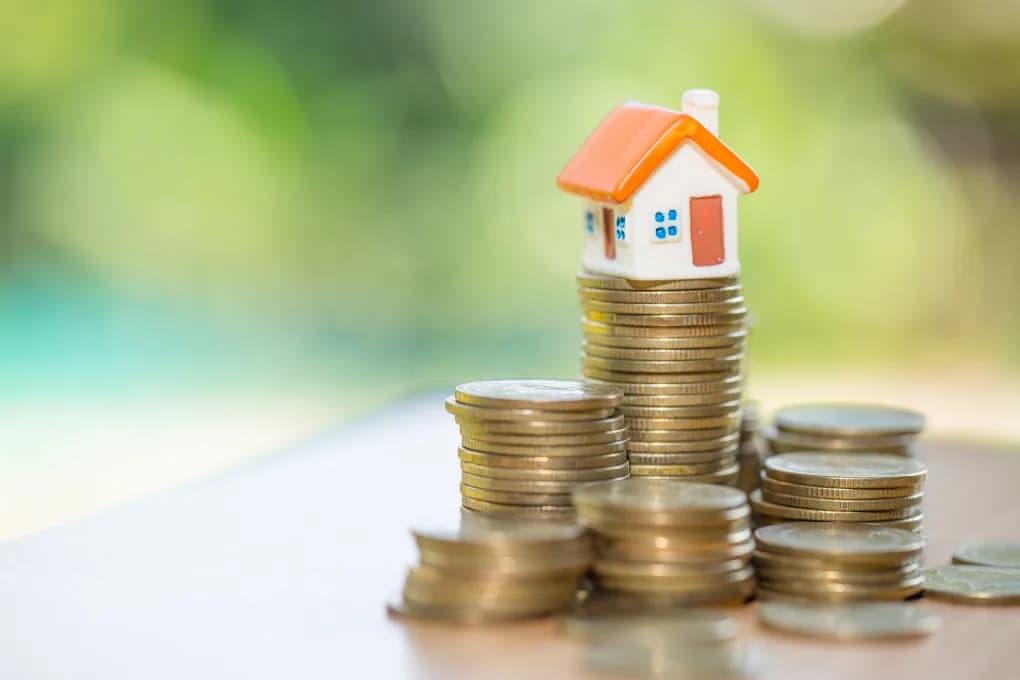
Higher mortgage rates have recently caused some homeowners to put moving plans on hold.
If you already have a lower rate on your current mortgage, taking out a new mortgage can look expensive by comparison. But there is another part of the equation that is easy to overlook:
the equity in the house you already own.
If you sell your current home, you may be able to use the proceeds from that equity to change the way your next purchase is financed.
That can include putting more money down or, in some cases, paying discount points to lower your mortgage rate.
Here is how it works.
First: Equity Does Not Directly Change Your Mortgage Rate
This is an important distinction.
Having $200,000 of home equity does not automatically qualify you for a lower rate.
Your mortgage rate depends on many factors, including the loan program, lender, credit profile, loan terms, and market conditions.
What your equity can do is give you cash after your home is sold.
You may then choose to use some of those proceeds when purchasing the next property. That can change the overall cost of your next mortgage.
What Are Discount Points?
Discount points are an upfront mortgage cost.
You pay more money at closing in exchange for a lower interest rate.
According to the Consumer Financial Protection Bureau, one point equals 1% of your mortgage amount.
For example:
If your new mortgage were $300,000:
1 point = $3,000
0.5 point = $1,500
2 points = $6,000
Paying points should result in a lower rate than the same lender's comparable zero-point option.
However, there is no universal rule saying one point lowers your rate by a certain amount. The reduction depends on the lender, type of mortgage, and market at that time.
How Your Existing Home Equity Can Enter the Picture
Imagine you own a house worth more than the balance remaining on your mortgage.
After selling, paying off your mortgage, and covering the expenses connected with the transaction, you have cash proceeds left over.
That money can potentially be used in several ways when buying your next home.
Option 1: Put More Money Down
A larger down payment means borrowing less. If you have built significant equity in your current home, you may be able to use some of the proceeds from the sale to increase your down payment on the next house.
For example, here is how the monthly payment changes on a $500,000 home with a 30-year mortgage at 7%:
Purchase Price | Down Payment | Mortgage | Est. Monthly Principal & Interest |
$500,000 | $75,000 | $425,000 | $2,827/month |
$500,000 | $175,000 | $325,000 | $2,162/month |
$500,000 | $275,000 | $225,000 | $1,497/month |
Even though the interest rate is 7% in all three examples, the estimated monthly principal-and-interest payment changes significantly because the amount being borrowed is smaller.
For example, putting $275,000 down instead of $75,000 reduces the mortgage by $200,000. At the same 7% rate, that lowers the estimated principal-and-interest payment by about $1,330 per month.
This is why the interest rate should not be considered by itself. If you have substantial equity in your current home, that equity may allow you to borrow less for your next home and make the monthly payment more manageable even in a higher-rate environment.
Note: These examples assume a 30-year fixed mortgage at 7% and include principal and interest only. Property taxes, homeowners insurance, HOA fees, mortgage insurance, and other costs are not included. Actual rates, payments, and loan terms will vary.
Option 2: Use Some Proceeds for Discount Points
Instead of putting every available dollar into the down payment, a homeowner might discuss with their lender whether using some cash for discount points makes sense.
For example, you could compare:
Option A: Larger down payment, no points
Option B: Slightly smaller down payment, some money toward points
The better choice depends on the actual loan offers.
Ask your lender to show you both.
The CFPB specifically recommends comparing mortgage choices with and without points and looking at the costs over different periods of time.
Option 3: Use a Combination
You do not necessarily have to choose between a large down payment and points.
Depending on your available proceeds and mortgage options, you may use part of your money toward the down payment and part toward closing costs or discount points.
Again, this is something to model with your lender before deciding.
When Does Buying Down a Rate Make Sense?
Paying points costs money today in exchange for lower payments later.
That means one of the most important questions is:
How long will it take for the monthly savings to recover the amount I paid upfront?
This is often called the break-even period. Imagine you pay $5,000 in points and the lower rate saves you $100 per month.
A simple break-even estimate would be:
$5,000 ÷ $100 = 50 months
In that simplified example, you would need to keep the mortgage for more than 50 months before the monthly savings exceeded the upfront cost.
Real mortgage decisions can be more complicated, but this gives you a useful way to think about points.
If you expect to sell or refinance before reaching the break-even point, paying the upfront cost may be less attractive.
Why Your Loan Amount Matters as Much as Your Rate
Homeowners sometimes compare:
“My mortgage rate now is X, and the new rate would be Y.”
That comparison leaves out the principal balance. Suppose your current home has a low mortgage rate but you still have a fairly large loan.
After selling, you may be able to put enough money down on the next property to take out a much smaller mortgage.
A higher rate on a smaller loan may produce a different monthly payment than you expect. That does not mean the new home will always be cheaper.
It means you need to compare the actual numbers rather than the interest rates alone.
Questions to Ask Your Mortgage Lender
If you are considering moving, bring your estimated home-sale proceeds to a lender and ask for several scenarios.
Do not ask only:
“What is today's rate?”
Ask:
What would my payment be with this down payment?
What would it be with a larger down payment?
What would one discount point cost?
What rate would I receive with that point?
What about two points?
What is the monthly savings?
What is my break-even period?
Would a larger down payment be more useful than buying points?
Are there mortgage insurance differences?
What cash reserves should I keep after closing?
This gives you information you can actually use.
Where Selling Your Existing House Fits In
Before you can decide how to use your equity, you need a realistic idea of what your current house could sell for.
You also need to estimate what you would actually keep after:
Paying off the mortgage
Addressing liens, if any
Paying applicable selling costs
Completing any repairs you choose to make
If your house needs significant work, those repairs can reduce the amount of cash you have available for your next purchase.
This is one reason an as-is offer can be useful when comparing options.
Get Another Number Before You Decide
Dominion Properties buys Maryland homes as-is.
You do not have to repair or renovate the house before we evaluate it. You can also leave unwanted belongings behind.
One of our local homebuyers completes one walkthrough and provides a fair, no-obligation cash offer.
That does not mean a direct sale will be the right choice for every homeowner. But having an actual offer gives you another number to compare.
You can look at what you might receive from a traditional sale after expenses and compare that with an as-is cash offer. Then you can take the estimated proceeds to your mortgage lender and see what they could mean for your next purchase.
Your Equity May Give You More Choices Than You Think
A higher mortgage rate can make moving look less attractive at first, but your current interest rate is only one part of the financial picture.
The equity in your home may allow you to make a larger down payment, borrow less, or explore paying points for a lower rate on your next mortgage.
If you want an as-is cash offer, Dominion Properties can evaluate homes throughout Baltimore City, Baltimore County, and surrounding counties throughout Maryland, which can include Anne Arundel, Harford, Howard, and Carroll counties.
Frequently Asked Questions
Can I use home equity to lower the mortgage rate on my next house?
Home equity itself does not lower a mortgage rate. If you sell your current home, you may be able to use some of the cash proceeds to pay discount points, which can reduce the rate offered by your lender.
What are mortgage discount points?
Discount points are fees paid upfront in exchange for a lower mortgage interest rate. One point equals 1% of the loan amount.
How much does one point lower my mortgage rate?
There is no fixed amount. The rate reduction for each point depends on the lender, mortgage type, and market conditions.
Is it better to make a larger down payment or buy points?
It depends on the loan options available to you and how long you plan to keep the mortgage. Ask your lender to show you both scenarios so you can compare upfront costs, monthly payments, and total costs.
How do I calculate my home equity?
A basic estimate is your home's current value minus what you owe on it. Your actual proceeds after selling may be lower because mortgages, liens, and selling expenses need to be paid.
Are mortgage rates too high to move?
That depends on your individual numbers. Your next payment is affected by the mortgage rate, loan size, down payment, loan term, taxes, insurance, and other costs—not the interest rate alone.
Should I sell my house to access my equity?
Selling is one way to convert home equity into cash, but whether you should sell depends on your housing needs and finances. Compare your expected proceeds and next-home costs before deciding.